
Treatment Plant Groundbreaking


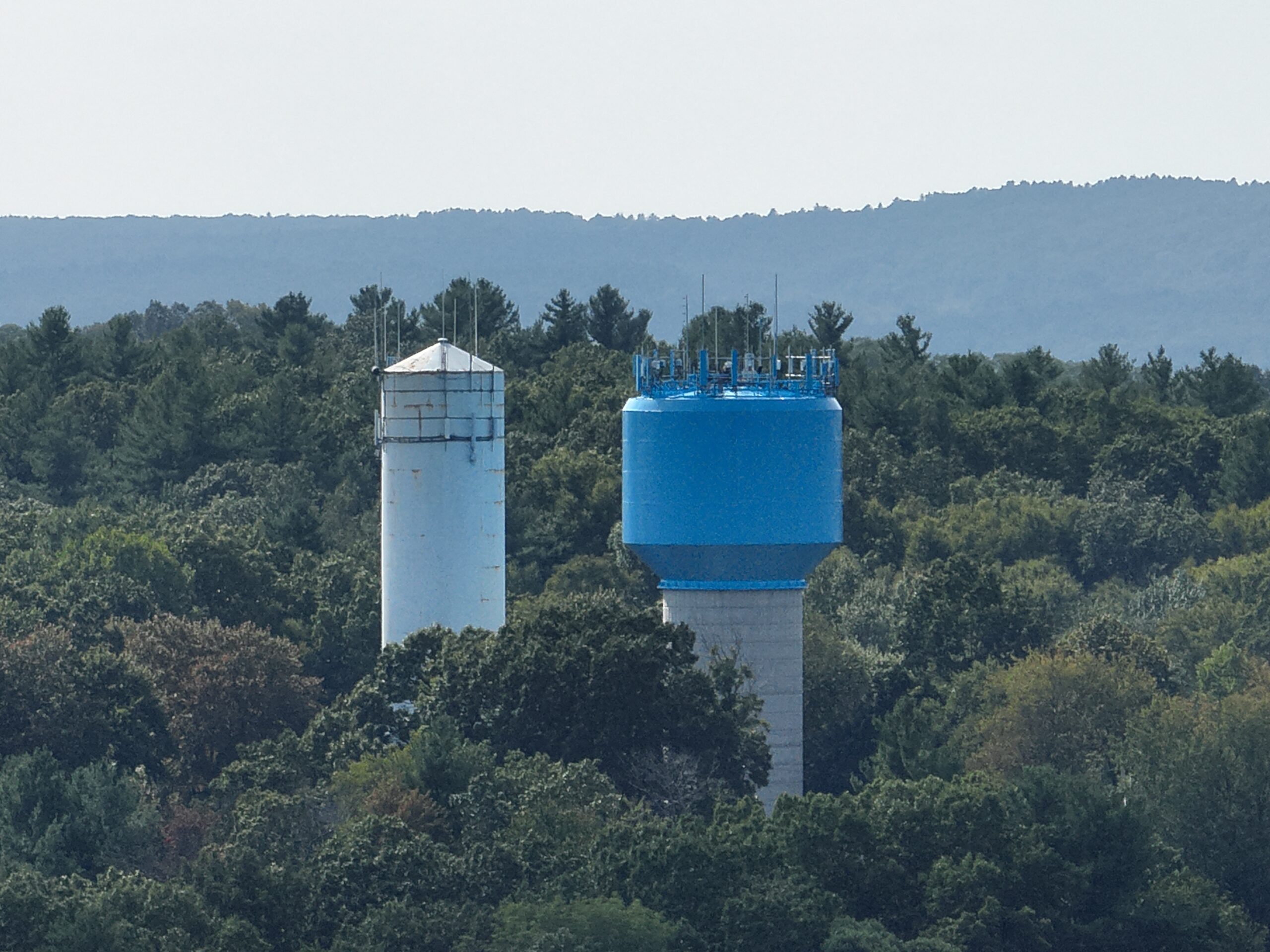
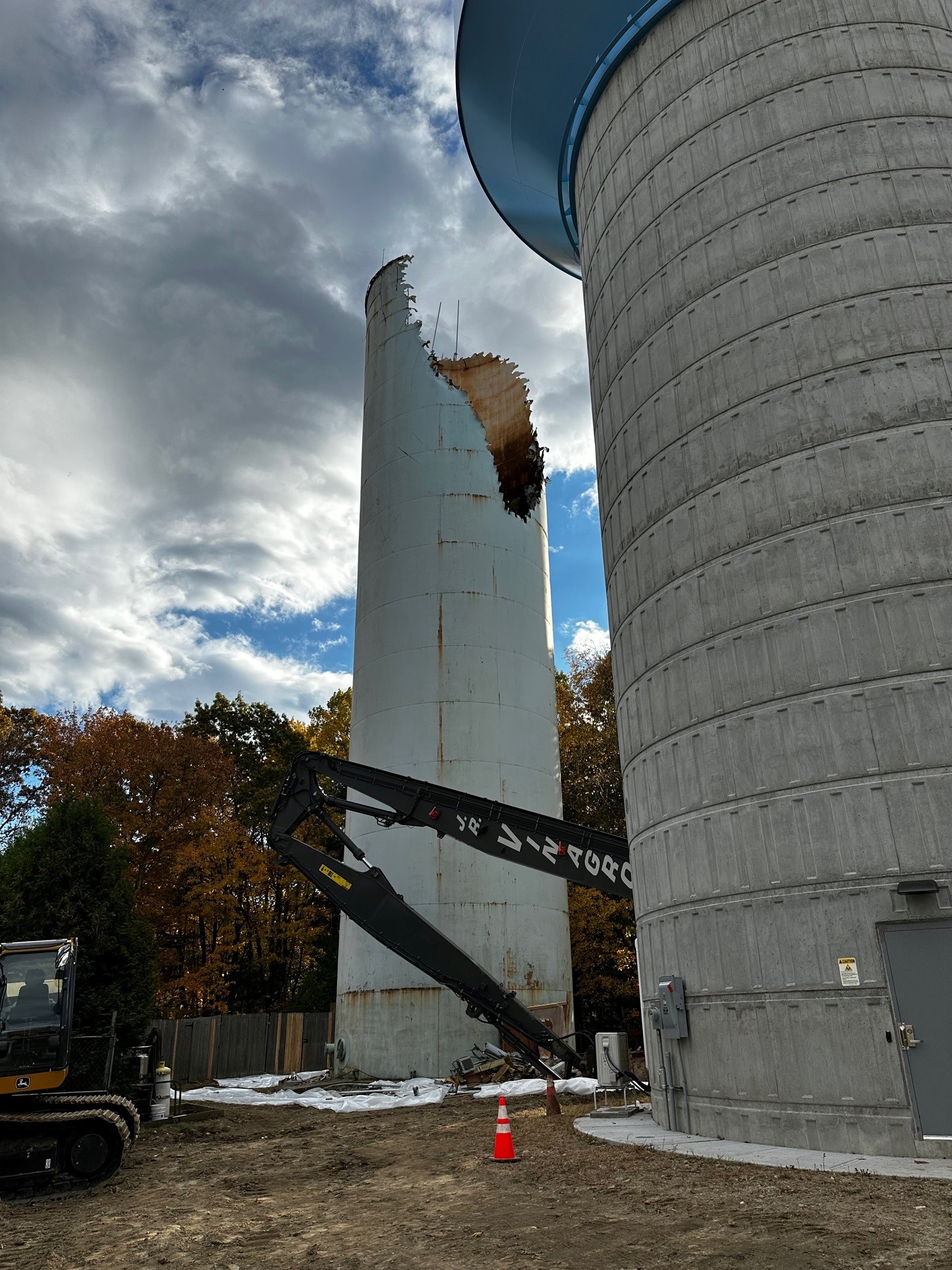
The Littleton Water Department has begun the process of replacing the existing water storage tank on Cedar Road with a NEW Storage Tank which will be constructed on the parcel abutting the existing water tank parcel (34 Cedar Road). The first step in this process was retaining the services of Tata & Howard, Inc. for the design and construction oversight of the New Cedar Hill Water Tank. Over the next several weeks you may notice some activity taking place at or near the existing tank site, as survey and soil borings are undertaken to assist in the design and layout of the new tank. The Littleton Water Department, along with Tata & Howard, plans on hosting an information session with abutters sometime after the New Year to present the plan and take questions from abutters.
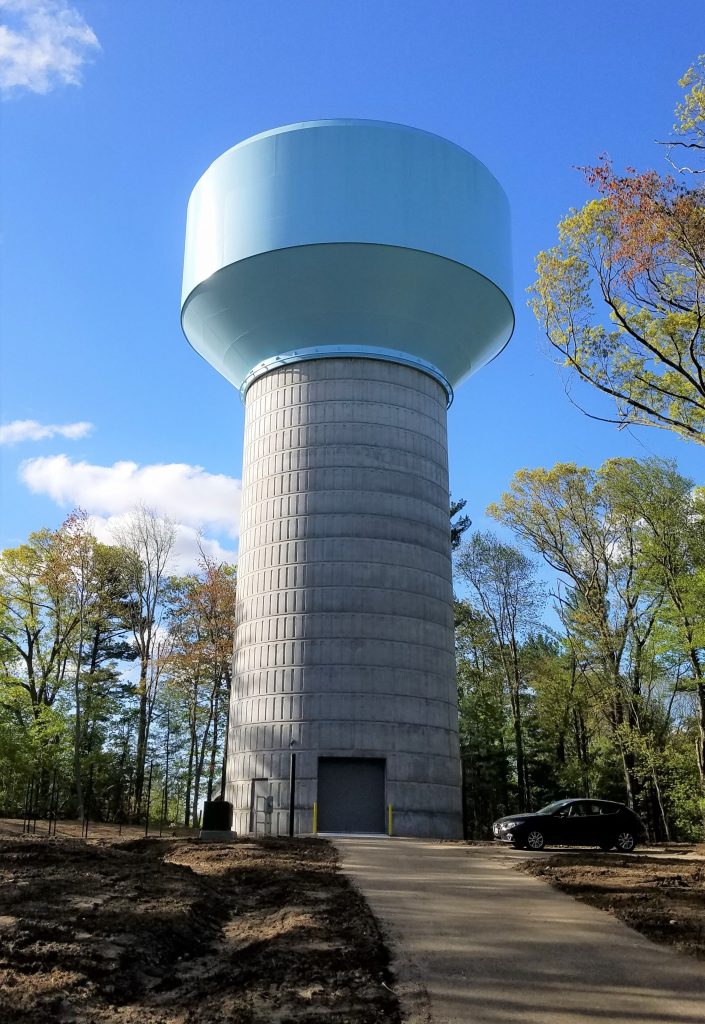
A few facts about the project:
This page will be updated as more information becomes available.
This study’s objective is to demonstrate that the proposed future peak power generators in Littleton (the “Project”) will comply with the Massachusetts Department of Environmental Protection (“MassDEP”) Noise Policy for both broadband and tonal noise at the nearest residential property lines and residences and will comply with the Littleton Noise Bylaw.
The Littleton Electric Light and Water Department has partnered with Littleton High School to create a dual enrollment program for Littleton High School students who are interested in pursuing college-level courses in the fields of engineering/technology or environmental sciences.
The Dual Enrollment program provides opportunities for Littleton High School students to take college-level courses and earn credit toward their future college degrees. LELWD will cover the cost of the course as well as any books that the student may need.
Requirements:
Process (To be completed in this order):
Deadlines:
To learn more about the process, Click Here.
To submit an online application, Click Here.
To learn about The Denise M. Pagacik Memorial Scholarship, Click Here.
Download PDF of Electric Rate Schedule PPC
Designation: MDPU 190
All filed retail rate schedules referencing this clause.
The object of the PPC clause is to recover the total cost of power supply including losses.
The “total cost of power supply” is defined as the sum of the fixed and variable costs of power (including fuel and pool interchange net costs), and the cost of transmission of electricity by others, recorded in the FERC Uniform System of Accounts under account numbers;
555 Purchased Power;
557 Other Purchased Power; and
565 Transmission of Electricity by Others.
There shall be added to each monthly bill, for each schedule, an amount equal to the total kWh billed
during the month multiplied by the Purchased Power Charge determined as follows:
PPC = A + C
where
PPC = Purchased Power Charge
A = Estimated average cost of purchased power for the calendar year per kilowatt-hour sold as forecast by the Department, net of charges or credits for NEPOOL interchange, plus the total savings credited to Residential customers under the PASNY Power Credit Clause.
C = Adjustment for past differentials between purchased power cost incurred and Power Cost Adjustment revenues collected.
Effective: April 1, 2015
Download PDF of Electric Rate Schedule 80
Superseding: MDPU 180
Applicable to:
In the Towns of Littleton and Boxborough, any customer other than the Town of Littleton, for outdoor lighting including unaccepted streets.
The Department will own, install, service and energize lights of the size and type listed below, to be connected directly to the Department’s existing facilities. Light fixtures will be energized from approximately 1/2 hour after sunset to 1/2 hour before sunrise, about 4,200 hours annually.
Additional poles or facilities at extra cost.
Go here to apply for Private Lighting.
For each light and pole, to recover the cost of the light fixture, hardware, pole, and maintenance.
| Size (Watts) |
Type | Approx. Lumens | Approx. Monthly kWh per Fixture |
Monthly Charge |
| 175 | MV Roadway | 8,000 | 67 | $4.40 |
| 400 | MV Flood | 22,000 | 158 | $8.75 |
| 1000 | MV Flood | 63,000 | 354 | $15.93 |
| 50 | MH Roadway | 4,000 | 21 | $4.55 |
| 100 | MH Roadway | 9,600 | 41 | $5.81 |
| 400 | MH Flood | 32,000 | 157 | $12.79 |
| 1000 | MH Flood | 140,000 | 385 | $14.29 |
| 0 to 50 | LED Roadway | 2,480 | 10 | $6.83 |
| 51 to 100 | LED Roadway | 4,806 | 30 | $8.72 |
| 101 to 150 | LED Flood | 48 | $19.19 | |
| 35′ Pole | N/A | N/A | $4.00 |
For all kWh’s, a charge per kWh to recover the cost of purchased power and transmission in accordance with currently filed Purchased Power Charge (PPC).
Charges for lighting services will appear as an item on a customer’s electric bill and bear the same terms as the customer’s general service rate.
Lamp replacement and maintenance will be performed as soon as possible following notification by customer for the need for such service. No light shall be more than 150 feet from the Department’s existing overhead distribution facilities. The customer shall agree the Department will not be required to move its facilities to another location on the customers’ premises unless the customer shall bear the cost thereof. Customer hereby agrees to take service for a minimum period of 12 months, unless the customer’s right to occupy the premises ceases during such period. This schedule reflects actual expenses incurred in operation and maintenance, including fuel.
Effective: April 1, 2015
In 2011, the Littleton Electric Light Department (LELD) began to allow its customers to interconnect distributed generation to LELD’s distribution system as long as the interconnecting customers followed the requirements and process laid out in LELD’s Interconnection Standards. Since then, the use of distributed generation is growing fast, not just here in Littleton but across the entire United States. As of October 2014, there was just less than 8,000 MW of installed solar capacity across the United States on residential and commercial rooftops. This growth has been stimulated by environmental concerns, economic stimulus, and utility rate structure that have provided a benefit to solar customers. Most utilities in the U.S., including LELD, use net metering to measure and compensate customers for the generation that they produce.
The Electric Power Research Institute (EPRI) conducted a national study that concluded that a typical residential customer uses 982 kWh of electricity per month. This typical bill can be broken into three distinct cost groups: $70 allocated to generation, $30 allocated to distribution, and $10 allocated to transmission. Transmission and distribution charges are fixed costs that do not vary on hourly customer loads, and roughly 80% of the generation costs are variable meaning that only $56 or 51% of a typical customer’s bill is variable. This is a significant dilemma, specifically with regards to grid-tied customer owned distributed generation, since LELD only charges a $5.00 base charge and collects the remainder of its fixed costs through a customer’s consumption.
Prior to May 2015, LELD’s net metering rate (rate 70) returned the full retail rate to solar customers for excess generation and did not recoup any of the fixed costs through a distribution charge. In May of 2015, the Board of Commissioners approved a new net metering rate (rate 70) that was a better balance between simplicity and accuracy, aligned costs and prices, supported environmental stewardship, and ensured that rates were well suited and equitable for all customers. This was accomplished by splitting apart the rate structure into a Purchased Power Charge (Cost of Energy) and a Distribution Charge (Fixed Costs).The net metering rate was amended to only return the Purchase Power Charge for excess generation and a solar distribution charge was introduced to recover some of the fixed costs.
The actual electricity generated by a solar PV system is a function of its size (nameplate rating), efficiency, sun exposure, and a variety of other factors. According to the Massachusetts Clean Energy Center, 1 kW of an optimal solar PV system will generally produce 1,320 kWh per year. This production spread over a 12 month period equates to 110 kWh per month per kW of an installed solar PV system. In the LELD net metering rate (rate 70), a solar distribution charge was established to recover some of the fixed costs that are not being recovered through customer consumption. For a residential customer the solar distribution charge is the product of 110 kWh, per 1 kW of installed distributed generation and LELD’s Distribution Energy Charge ($0.0265). According to the Massachusetts Clean Energy Center, residential solar PV systems are generally sized around 5 kW, which would equate to a $14.58 solar distribution charge to a LELD customer. Even with the solar distribution charge and customer base charge, LELD is only recovering approximately 37% of the fixed costs through fixed charges.